| Property | Value |
|---|---|
| @id | the:Clash_20251122 |
| type | Concept, Resource |
| created | 2026-02-04T20:05:09 |
| created | 2025-11-22 |
| definition | Clash 冲突 Chōngtú Doughty sword Interpenetration Superposition Coincidence The figures should be the color of bronze. bronze HSV: 0.051, 1.0, 0.4.4 Metallic 0.9 Roughness 0.2 Red T5 is Greeks, left-handed c HSV: 0.00, 0.946, 0.812 M: 0.0 R: 0.5 Madder Brick Red/Brownish 0.05 - 0.10 0.5 - 0.7 0.4 - 0.6 Purple T5 is Trojans, right-handed c HSV: 0.676, 0.757, 0.813 M: 0 R: 0.5 The Iliad features several significant one-on-one battles, known as duels, between Achaean (Greek) and Trojan heroes. Glaucus- Diomedes truce Achaean (Greek) Side Agamemnon: King of Mycenae and the overall commander-in-chief of the Greek forces. Achilles: The greatest Greek warrior and the central character of Homer's Iliad, known for his near invincibility and his rage when slighted by Agamemnon. Odysseus: King of Ithaca, known for his cunning and strategic mind, who conceived the idea of the Trojan Horse. Menelaus: King of Sparta and the husband of Helen, whose abduction by Paris was the cause of the war. Diomedes: King of Argos, a highly skilled and fearless warrior who even wounded gods in battle. Trojan Side Hector: The crown prince of Troy and the greatest Trojan warrior, known for his noble nature and his role as the main leader of the Trojan army in battle. Paris (also called Alexander): The Trojan prince who abducted Helen, thereby starting the war, and a skilled archer. Aeneas: A Trojan hero and son of Aphrodite, who led the Dardanian allies and later became the ancestor of the Romans. Sarpedon: A son of Zeus and the leader of the Lycian allies, he was a formidable warrior who was eventually killed by Patroclus. Glaucus was an important figure in the Trojan War, known for his leadership of the Lycian contingent, significant actions in battle, and a famous moment of honor and ancestral friendship with the Greek hero Diomedes. Patroclus vs. Sarpedon (Book 16): Patroclus, fighting in Achilles' armor, kills Sarpedon, a son of Zeus and a high-ranking Trojan ally. This battle is notable for the emotional weight Zeus feels as he watches his son die. Odysseus vs. Socus (Book 11): After killing several Trojans, Odysseus is challenged by Socus, who manages to wound him. Odysseus kills Socus in return but must be rescued by Ajax and Menelaus due to the severity of his wound. Coordinates are dualTProto.glb (clash structure and figure) From above, counting clockwise the congruent faces for both purple and red structures, where the figure is standing in front of a face, face number 1 (f1) Patroclus v Sarpedon f1 Diomedes v Glaucus f2 Odysseus v Socus f3 Menelaus v Paris f4 Achilles v Hector f5 Colors Greeks Tunics and cloaks were often dyed red for war by many city-states, including Sparta and Athens, as it was a common and practical color. Trojans were known for weaving and dyeing their clothing in "royal colors," including purple. With this project I discovered the correct way to share external colors, say from paint.net, with blender. The hex value when added to blender color selector automatically gets the Gamma conversion turning the sRGB Hex to the correct Linear RGB value This provides a solution for sharing my paint palette with my digital palette, as my paint palette is captured in paint.net. The Greek red is now Alizarin Crimson and the Trojan purple is now Mars Violet. The tie-ins of T5 Links to the Odyssey were so interesting that I'm intentionally designing T5 Clash with the Iliad in mind. Specifically, leading characters are represented in single combat or duels, where description of the battle is available in the Iliad. Individual contests between heroes within a larger battle in the Iliad are generally referred to as single combats or duels, often described by the ancient Greek term monomachy (from mónos meaning "single/alone" and makhḗ meaning "battle/fight"). I actually started the Iliad first, got to chapter VI or VII, then switched to the Odyssey, which I finished, so now I'm back to the Iliad. Certain contests are of interest. Achilles vs Hector, Diomedes and Glaucus (for the moment of honor and ancestral friendship), Menelaus vs. Paris, leaving Agamemnon and Ulysses vs. Aeneas and Sarpedon. As I'm reading the Iliad, having seen the movie Troy, I keep expecting things to happen differently. With Hector rampaging toward the ships I expected Patroclus to secretly don Achilles armor and be killed by Hector thinking he was Achilles. Of course, that's not what happens though there are parallels. I was anxious to get to the big Hector-Achilles battle. I'm sure the movie was probably closer to what must have happened at Troy but it is so different from the book, especially given the role the gods play in all the battles. It's like leaving half the cast out of the movie. If you were to include gods: Zeus Hera Neptune Diana Apollo It's become clear I'm reading a Roman translation, I see Neptune instead of Poseidon, etc. ancient Greeks used a gesture similar to the modern handshake, called dexiosis (Greek: δεξίωσις), when familiar men met. It was a common and significant form of greeting and social interaction. This gesture involved clasping the right hands and served several purposes: A sign of trust and peace By extending an empty right hand, individuals demonstrated they were not holding a weapon. A symbol of equality Handshaking was a gesture exchanged between equals, such as gods with gods, warriors with warriors, or citizens of equal standing. To seal agreements The gesture was used to pledge good faith, comfort the bereaved, or seal an alliance or oath. Dark crimson of the house of priam, from miller's book. A literary device. Symbolism of Blood and Death: The most potent meaning of crimson is blood. Using this color for the royal house subtly foreshadows the massive bloodshed and inevitable violent destruction that will befall Priam's family and Troy. The war is the central conflict, and this description links the Trojans directly to the violence they will endure. |
| image | 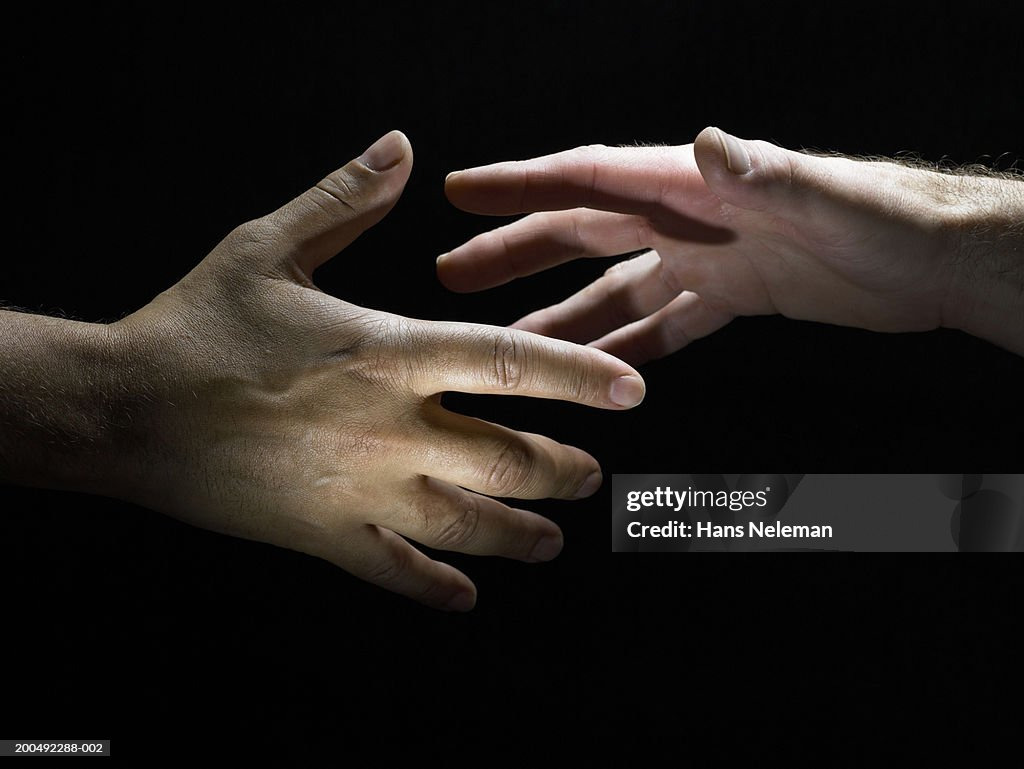 , , 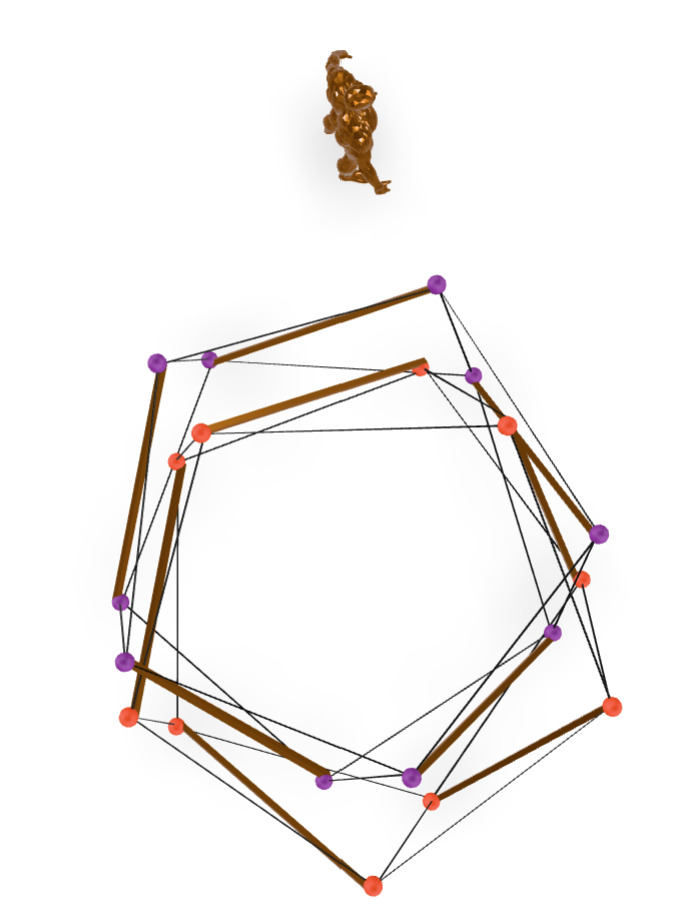 |
| inScheme | Digital Art Notes |
| skos:prefLabel | Clash Notes |
| tag | Tension T5 Clash |